







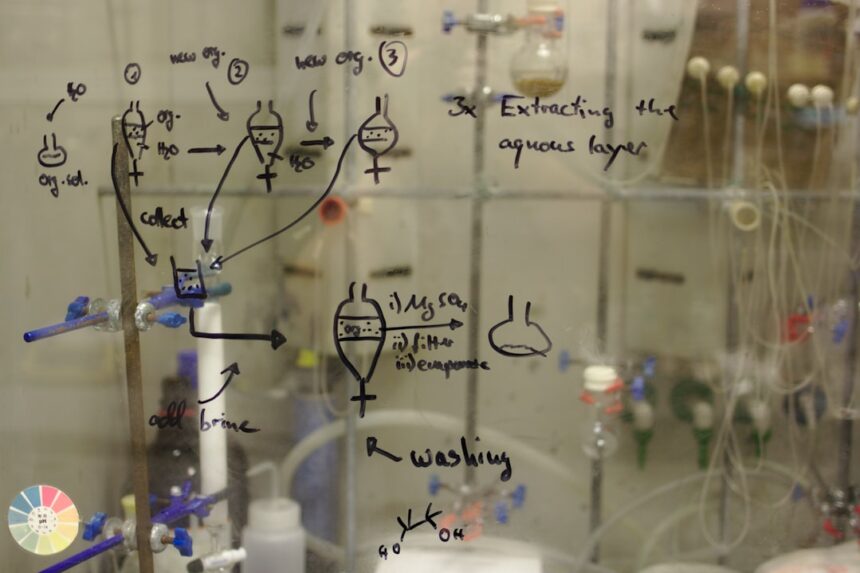
As we gaze up at the night sky, filled with twinkling stars and mysterious planets, it’s hard not to wonder about the secrets of the universe. From the intricate dance of atoms and molecules to the vast expanse of space and time, science is the key that unlocks the doors to understanding our cosmos. But science is more than just a subject in school or a topic of interest for enthusiasts – it’s a way of thinking, a method of discovery, and a journey of exploration that has the power to transform our lives and shape our future. In this blog post, we’ll delve into the fascinating world of science, exploring its various branches, recent breakthroughs, and the impact it has on our daily lives.
The Branches of Science: Understanding the Complexity of the World
Science is a vast and diverse field that encompasses various disciplines, each with its unique perspective and approach. The main branches of science include physics, chemistry, biology, earth sciences, and mathematics. Physics, for instance, is the study of matter, energy, and the fundamental laws that govern the behavior of the physical universe. From the laws of motion to the mysteries of quantum mechanics, physics helps us understand the underlying principles that shape our reality. Chemistry, on the other hand, is the study of the composition, properties, and reactions of matter, revealing the secrets of the molecular world and the building blocks of life. Biology, the study of living organisms, explores the intricate web of life, from the simplest bacteria to the complex ecosystems that sustain our planet. Earth sciences, including geology, meteorology, and oceanography, help us understand the dynamic systems that shape our planet, from the movement of tectonic plates to the patterns of global climate change.
Recent Breakthroughs in Science: Advancing Our Knowledge and Understanding
Recent years have seen numerous breakthroughs in science, transforming our understanding of the world and opening up new avenues for research and discovery. In the field of physics, the discovery of gravitational waves has confirmed a key prediction made by Einstein’s theory of general relativity, providing a new window into the universe and its most violent and energetic events. In biology, the development of CRISPR gene editing technology has revolutionized the field of genetics, enabling scientists to edit genes with unprecedented precision and opening up new possibilities for the treatment and prevention of genetic diseases. In the field of computer science, advancements in artificial intelligence and machine learning are transforming industries and revolutionizing the way we live and work, from virtual assistants and self-driving cars to personalized medicine and predictive analytics.
The Impact of Science on Our Daily Lives: From Technology to Medicine
Science is not just a abstract concept or a subject of interest – it has a profound impact on our daily lives, shaping the technology we use, the medicine we take, and the world we live in. From the smartphones we carry to the medical treatments we receive, science is the driving force behind innovation and progress. In the field of medicine, scientific research has led to the development of life-saving treatments and vaccines, from antibiotics and antivirals to cancer therapies and gene therapies. In the field of technology, scientific advancements have enabled the development of faster and more powerful computers, more efficient and sustainable energy sources, and more advanced and sophisticated communication systems. Moreover, science informs policy and decision-making, from climate change mitigation and environmental conservation to economic development and social justice.
The Future of Science: Emerging Trends and Challenges
As we look to the future, science is poised to continue its rapid progress, driven by emerging trends and technological advancements. The rise of big data and analytics, for instance, is transforming the way scientists collect, analyze, and interpret data, enabling new insights and discoveries across disciplines. The increasing importance of interdisciplinary research is also leading to new collaborations and breakthroughs, from the intersection of biology and physics to the fusion of computer science and social science. However, science also faces numerous challenges, from funding and accessibility to ethics and responsibility. As scientists and policymakers, it’s essential to address these challenges, ensuring that science is used for the betterment of society and the planet, and that its benefits are equitably distributed and accessible to all.
Conclusion: The Power of Science to Transform Our Lives
In conclusion, science is a powerful tool that has the potential to transform our lives, shape our future, and unlock the secrets of the universe. By understanding the various branches of science, recent breakthroughs, and the impact of science on our daily lives, we can appreciate the complexity and beauty of the world around us. As we move forward, it’s essential to continue investing in scientific research, promoting STEM education, and addressing the challenges and ethical considerations that arise from scientific advancements. By doing so, we can harness the power of science to create a better world, a world that is more sustainable, equitable, and just for all. Whether you’re a scientist, a student, or simply a curious individual, the world of science has something to offer, and its wonders and discoveries await your exploration.